

Episode Planning Software for TikTok Series and Vertical Drama
If your series map lives in one whiteboard, your scripts in another app, and your team notes in a graveyard of versioned documents, the problem is not your story. It is your stack. Episodic story planning software exists to solve exactly that gap, especially when you are building short-form serial drama, branching arcs and episode pipelines that need to move fast.
Generic writing tools can carry a screenplay from blank page to draft. They are far less useful when you need to see episode logic, choice paths, character continuity, cliffhanger placement and team edits at the same time. That is where specialised software starts to matter. Not as a nice extra, but as part of the production workflow.
For creators working in vertical drama, this difference is even sharper. The format rewards speed, precision and retention. Episodes are short. Hooks have to land early. Branches cannot drift. If your planning tool slows down the room or hides the structure, it is doing the opposite of its job.
What episodic story planning software should actually do
At a minimum, good episodic story planning software should let you map story before the draft becomes hard to move. That sounds obvious, but many tools still treat planning as a thin pre-writing layer rather than the control centre for the whole project.
For episodic work, planning is not just beat notes and a few character bios. It is season logic, episode cadence, reveal timing, branch management and handoff to script pages. You need to understand what happens in Episode 3 because of a choice in Episode 1. You need to know whether one character vanishes for four chapters by mistake. You need to spot when a branch multiplies production complexity without adding enough drama.
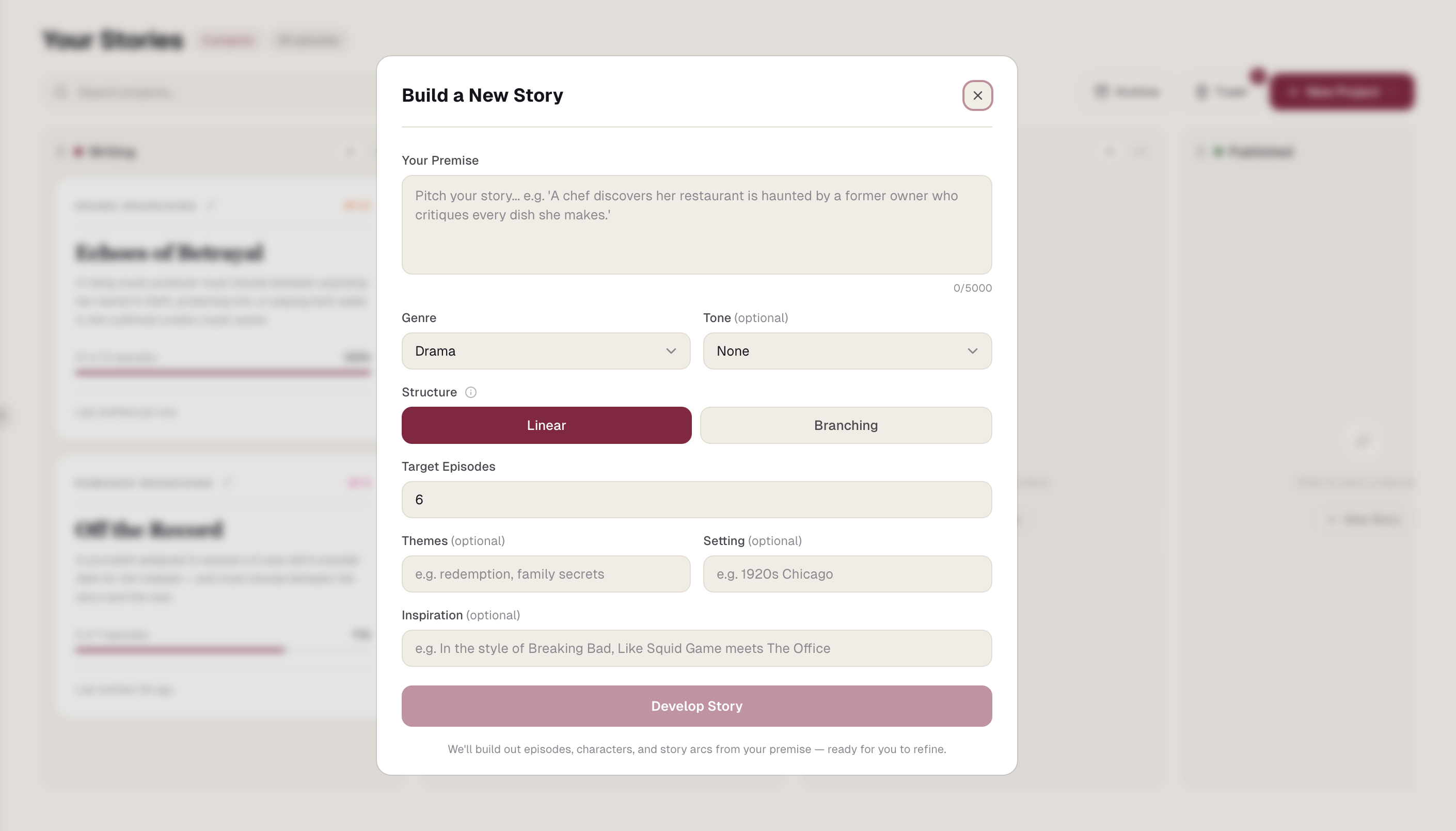
That means the right software should combine visual structure with writing functionality. If you can map but not draft, you end up exporting too early and losing momentum. If you can draft but not see the story architecture, you end up writing blind.
Why general script apps often fall short
A standard screenwriting app is usually designed around linear scripts. That is still useful if your project is a traditional pilot or feature. It becomes limiting when your series is episodic, interactive, or built around parallel routes.
The issue is not that these tools are bad. It is that they optimise for a different job. They help with formatting, page flow and basic collaboration, but they rarely give you a native way to track branching narrative logic or visualise a serial story as a living system.
That trade-off matters. Once your project includes multiple episodes, recurring decision points and collaborative revision, fragmentation creeps in quickly:
- Writers outline in slides
- Producers comment in spreadsheets
- Someone eventually asks which draft reflects the current branch
Nobody wants to spend a development meeting solving file management.
The features that matter most
The strongest episodic story planning software tends to share a few traits.
Visual story logic
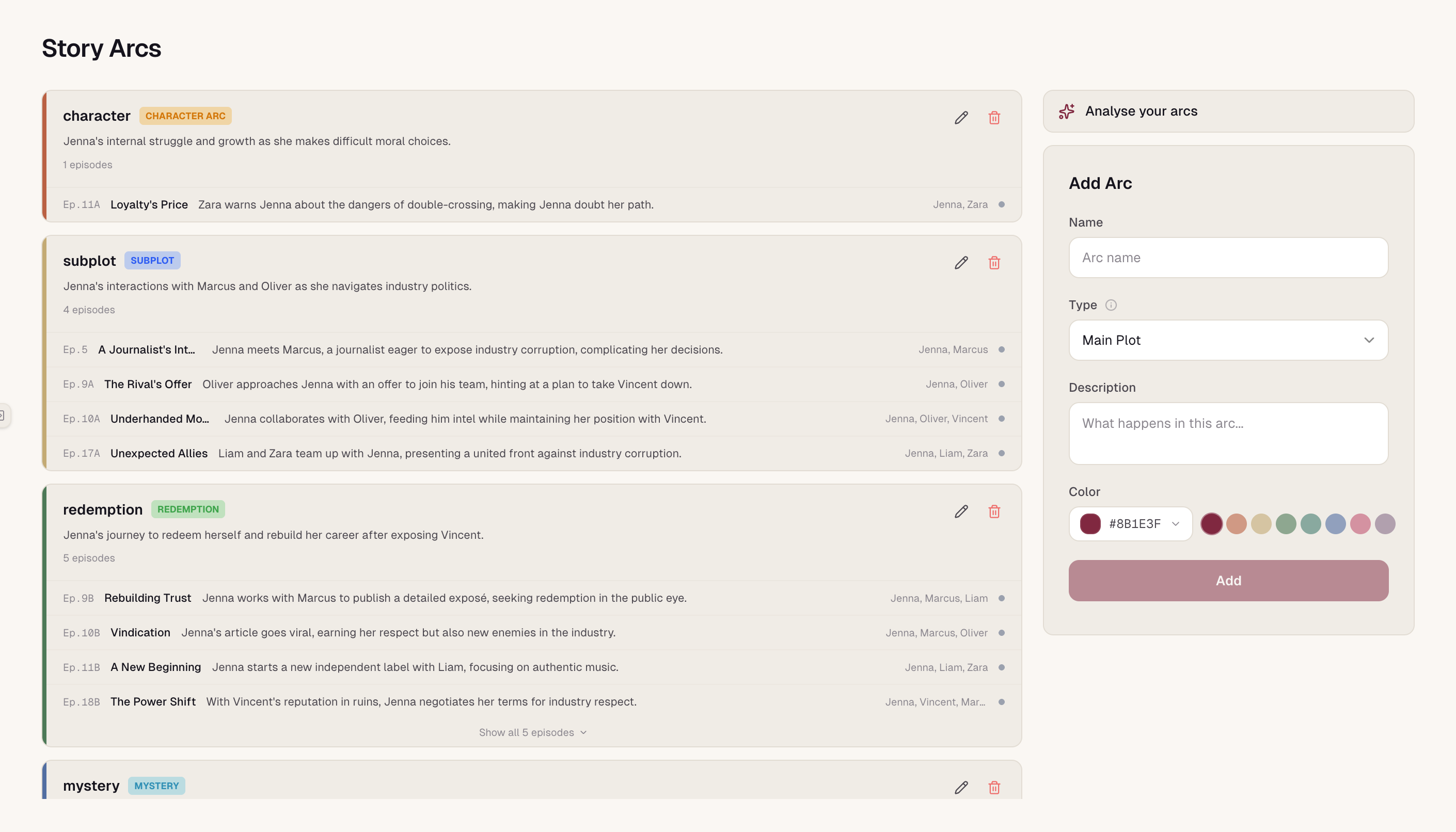
Node-based planning is especially useful here because it shows sequence, dependency and divergence in one view. For branching drama, that is far more practical than scrolling through static documents.
Planning and writing in one place
Moving from story map to script should feel like progression, not migration. When the outline and the draft live in separate systems, continuity errors multiply and revision slows down.
Built-in collaboration
Episodic development is rarely solitary for long. Even indie teams quickly run into feedback loops, edit approvals and version confusion. Real-time collaboration, comments and shared visibility are not enterprise extras. They are baseline workflow features.
Import and export
No tool exists in complete isolation. You may need to bring in existing material, share work with external stakeholders, or move a project towards production in another format. The software should support that reality rather than forcing lock-in.
Episodic story planning software for branching drama
Branching stories expose every weakness in a writing workflow. What looks manageable in a linear outline becomes messy once one decision point creates two emotional consequences, three scene variants and a continuity burden across later episodes.
This is where episodic story planning software earns its place. A strong platform lets you see branches as designed choices, not accidental chaos. You can compare paths, test pacing and keep the narrative legible even as complexity grows.
Just as importantly, it helps you decide when not to branch. More choice is not always better drama. Some projects benefit from tightly controlled divergence that quickly rejoins the main spine. Others need broader route variation because audience agency is part of the concept. Good software should support both approaches without pushing you into complexity for its own sake.
For mobile-first drama, this balance is especially important. Viewer attention is short, cliffhangers carry heavy weight, and every branch has to justify itself on screen. Planning software should help creators protect momentum, not dilute it.
One workspace changes the speed of development
The hidden cost of fragmented tools is not just inconvenience. It is decision lag. When planning happens in one environment, scripts in another, and team feedback somewhere else, every update takes longer to verify. That slows creative judgement.
A unified workspace changes that:
- Writers can map arcs, draft scenes, adjust branches and review notes without rebuilding context every time they switch tabs
- Producers can see story status without asking for another export
- Teams spend more time shaping the series and less time reconciling documents
That is why platforms built around workflow unification have become more relevant. In a market where short-form scripted content moves quickly, creators need software that reflects how projects actually get made. Planning is not a separate ritual before the real work starts. It is part of the real work.
Scenvii is built in that direction, combining visual story mapping, scriptwriting, collaboration and production-oriented movement inside one environment designed for episodic and branching narrative development.
How to judge whether a tool fits your team
The best choice depends on what you are making and how you work. A solo writer building a straight serial may not need deep branching controls. A writer-led studio producing interactive vertical drama almost certainly will.
Start with your project structure
If your story is highly visual and branch-heavy, prioritise node-based planning and relationship visibility. If your process involves multiple stakeholders, put collaboration near the top of the list. If you are already deep in production, import and export flexibility may matter more than brainstorming features.
Then look at friction
How many handoffs does the tool remove? How quickly can someone new understand the story map? Can your team move from concept to episode draft without rebuilding material? The right platform usually reveals itself by reducing operational drag.
Consider cost in context
Price matters too, but not in isolation. Free or low-cost tools can be enough at the earliest stage. The real question is whether they still work when your project expands. A cheap stack becomes expensive once it starts costing your team hours, clarity or revision speed.
What this means for the future of serial storytelling
The rise of vertical drama and mobile-first series is changing what writers need from software. It is no longer enough to format scripts cleanly. Creators need tools that think in episodes, branches, retention beats and collaborative production flow.
That shift is healthy. It brings story development closer to the realities of distribution and audience behaviour without stripping out craft. In fact, better planning software often gives craft more room to work because structure becomes visible earlier. You can see where the hook lands, where the branch weakens tension, and where an episode ends a beat too late.
Episodic story planning software is not a replacement for writing instinct. It is infrastructure for using that instinct well at scale. When the tool matches the format, your series becomes easier to shape, easier to share and easier to move towards production.
Your next episode should not start with hunting for the latest file. It should start with a clear view of the story you are building and the momentum to write it forward.